
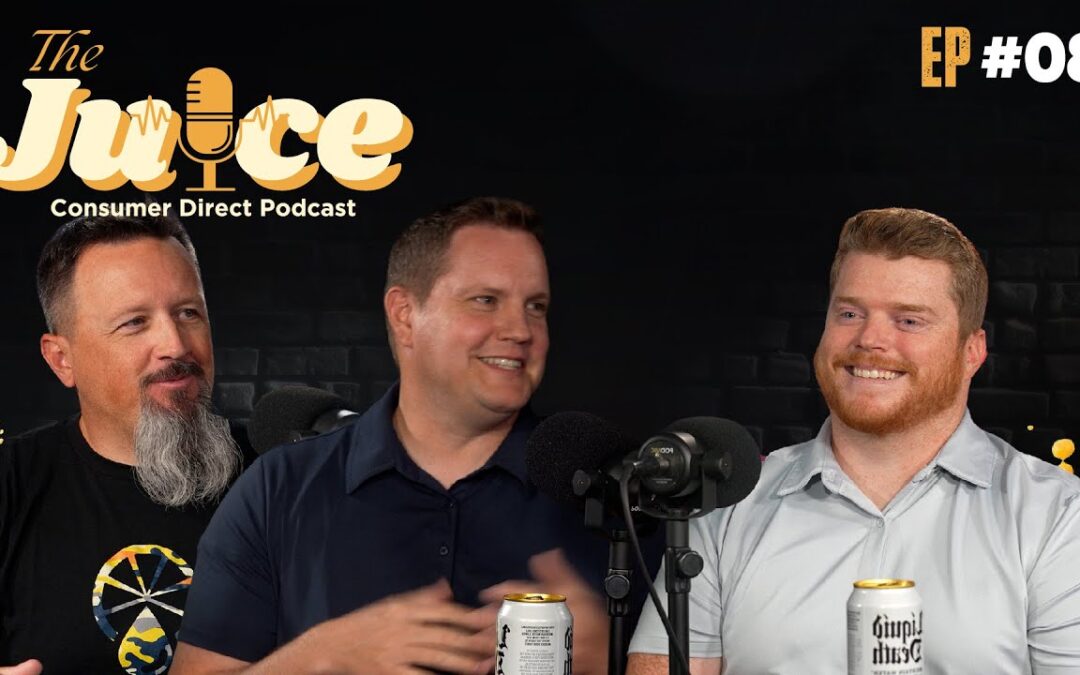
Squeeze's Director of Training & Development, Justin Jump, breaks down the exact frameworks — from "new hire goggles" to a 10-course team-lead curriculum — that get 87% of brand-new agents hitting bonus in their very first pay period.
Listen wherever you get your podcasts
Key takeaways
- Apply 'new hire goggles' to design onboarding environments that reduce first-day anxiety and signal organizational quality.
- Lean training beats long training: Squeeze's 3-day, 4-hour-per-day curriculum outperforms lengthier programs by cutting non-essential content and maximizing role-play and shadowing.
- End-of-training surveys with measurable scores create a feedback loop that drove Squeeze's rating from 4.1 to 4.5 in under six months.
- 87% of new Squeeze agents hit a performance bonus in their first pay period — a direct result of focused, client-specific training.
- Continuing education is essential to prevent agents from drifting away from proven processes after initial onboarding success.
- Leadership is a force multiplier: a 10-course team-lead curriculum and printed playbook ensure frontline supervisors are effective from day one.
- ~80% of new hire applications at Squeeze come from employee referrals, demonstrating how culture and agent satisfaction compound into a recruiting advantage.
Why Training Is the Core of Squeeze’s Client Promise
When Squeeze takes on a new client, that client is trusting the company to interact directly with their consumers and prospects. That trust lives or dies in the training room. Director of Training & Development Justin Jump joined hosts Nate Cay and Carson Poppenger to walk through the philosophies and tactical systems that power Squeeze’s “White Glove” agent experience.
Put Your “New Hire Goggles” On
Justin’s foundational principle: see Day One through the eyes of the person walking in nervous and uncertain. Inspired by an early manager who taught him to “face” retail shelves, Justin applies the same logic to every training environment — clean cables, organized rooms, and polished visuals signal to a new hire that the company they joined takes quality seriously.
Cut the Fat, Keep What Converts
Squeeze’s new-hire training runs just three days at four hours each — a deliberate contrast to the four-week programs Justin had seen elsewhere. The guiding question is always: does this content help an agent handle their specific part of the call? Because Squeeze agents specialize in the opening conversation and transfer or appointment-set — not the full sale — the curriculum is engineered around exactly that scope. Key elements of the lean model include:
- Role-playing and shadowing as the primary learning mechanisms
- End-of-training surveys scored on a 1–5 scale, used to cut underperforming content
- Live trainer delivery replacing passive video wherever feedback flagged disengagement
- Call-floor simulation on Day 3, including a supervised log-in at the agent’s actual workstation
- Client-specific “cross-training” on Day 4 so agents are campaign-ready before their first live shift
Replacing passive video with live instruction alone helped push average training survey scores from 4.1 to 4.5 out of 5 within six months — and correlates directly with 87% of new agents qualifying for a performance bonus in their first pay period.
Continuing Education: Protecting the Process Over Time
Carson flagged a pattern common across sales organizations: agents trained on a proven process start improvising after hearing about a colleague’s one-off success, drift from best practices, and watch their conversion rates slide. Squeeze’s answer is a fully online library of standard operating procedures and continuing-education modules that agents can reference any time — keeping the winning process front and center long after onboarding ends.
Leadership Development: The Team Lead Playbook
Justin’s latest initiative targets Squeeze’s frontline supervisors — called team leads — with a 10-course training program covering the specifics of their daily role. Alongside the digital curriculum, each team lead receives a printed full-color playbook covering coaching conversations, onboarding, feedback delivery, and more. The goal: eliminate the “what do I do here?” gap that plagues new managers and remove any performance lag on the campaigns they oversee.
Culture as a Retention and Recruiting Engine
Squeeze deliberately hires college students — they arrive moldable, learn fast, and respond to a culture built around them. Weekly pay cycles, attainable bonus structures, recognizable client brands, Friday meals, and branded merchandise all reinforce belonging. The result: roughly 80% of applicants come through employee referrals, and referred hires stick around longer because they already have a friend on the floor.
Put your new hire goggles on — you're looking through the lens of the new hire. They're walking in on day one, they're nervous, they don't know what to expect.
— Justin Jump
We're cutting out the fat and we're only putting in the things that matter.
— Justin Jump
87% of our new agents in their first pay period hit bonus.
— Nate Cay
Don't stop creating content and don't stop learning. Once you stop learning you're never going to get any better.
— Justin Jump
Episode chapters
- 00:11 — Introductions & Why Training Matters at Squeeze
- 02:00 — The 'White Glove' Experience & Hiring College Students
- 02:40 — New Hire Goggles: Seeing Day One Through Fresh Eyes
- 05:15 — Animated Training Content & Investing in Learning Tech
- 07:22 — Lean Curriculum: Cutting the Fat from a 3-Day Program
- 10:06 — Post-Training Surveys & Iterating on Feedback
- 12:12 — 87% First-Pay-Period Bonus Rate & Call-Floor Simulation
- 17:07 — Squeeze Culture: Performance-Driven & Coach-Up Mentality
- 22:15 — Continuing Education & Preventing Process Drift
- 24:52 — Team Lead Training Program & Printed Playbook
- 28:02 — Final Thoughts & Takeaways
Frequently asked questions
How long is new-hire training at Squeeze?
Three days, four hours per day. The curriculum is intentionally lean, focusing only on the skills agents need for their specific role: initiating consumer conversations and transferring or setting appointments.
What is the 'new hire goggles' concept in sales training?
It means consciously viewing the onboarding experience through the eyes of a nervous first-day employee. Trainers use this lens to eliminate environmental friction — disorganized spaces, passive videos, information overload — that undermines confidence before an agent ever takes a call.
How does Squeeze achieve an 87% first-pay-period bonus rate for new agents?
By pairing a focused skill curriculum with client-specific campaign training, a call-floor simulation on the final training day, and attainable bonus structures tied to both performance and call quality.
Why is continuing education important for sales teams?
Without reinforcement, agents who start with a proven process tend to experiment with alternatives, drift from best practices, and see conversion rates fall. Regular continuing education keeps the winning process active and corrects drift before it hurts results.
What does Squeeze's team-lead training program include?
A 10-course digital curriculum covering daily leadership responsibilities, plus a printed full-color playbook covering coaching, feedback, onboarding, and performance management — all accessible at the team lead's desk.
How does Squeeze use post-training surveys to improve its program?
Agents score training on a 1–5 scale at the end of each cohort. The team reviews feedback, identifies underperforming content or delivery methods, and iterates — a cycle that lifted average scores from 4.1 to 4.5 within six months.