
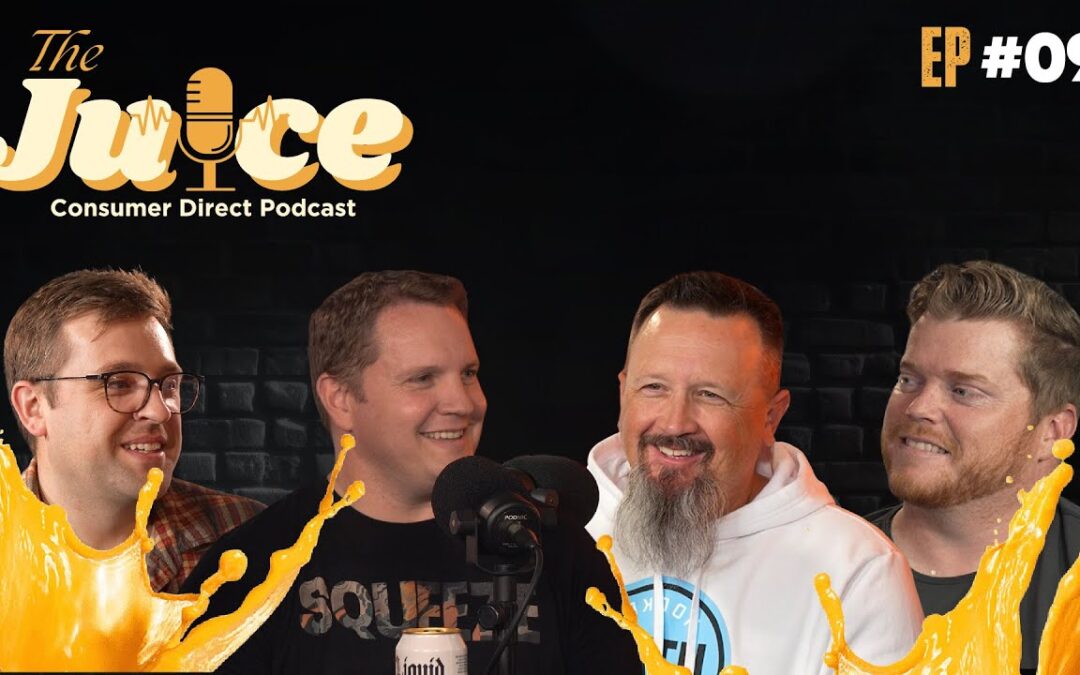
Bad handoffs, zero reporting, and commission breath are quietly killing close rates. The Squeeze crew — Carson Poppenger, Jake Thorpe, Justin Jump, and Nate Cay — break down the real culprits behind stalled sales processes and share battle-tested frameworks any consumer-direct team can apply today.
Listen wherever you get your podcasts
Key takeaways
- A seamless sales process — not marketing spend alone — is the primary driver of conversion in consumer-direct verticals.
- The Rock-and-Gem framework: identify the triggering event (Rock) and the deeper pain point (Gem) before pitching any solution.
- The 80/20 rule — consumers talk 80%, reps ask targeted questions 20% — leads to higher trust and near self-closes.
- Warm-transfer handoffs must reference the consumer's stated need immediately; 'How can I help you?' undermines the entire outbound effort.
- Baseline KPI reporting across every funnel stage is essential — you cannot fix what you cannot measure.
- SPIN Selling (Situation, Problem, Impact, Need-Payoff) is a transferable framework that works from small consumer transactions to large B2B deals.
- Humility and willingness to eliminate 'sacred cows' in the sales process are prerequisites for continuous improvement.
Why Sales Process Is the True Differentiator
Working daily across mortgage, financial services, insurance, solar, and home services, the Squeeze team has a front-row seat to what separates top-performing sales organizations from those that struggle to convert. The verdict: a dialed-in sales process is the secret sauce. Marketing spend means nothing if the experience between “hello” and transaction is broken.
Squeeze positions itself as a leader in the sales experience — not just customer experience — because every touchpoint from first contact to closed deal shapes both conversion rates and long-term customer lifetime value.
The Biggest Pitfalls Sales Teams Make
- No meaningful reporting. One partner couldn’t quantify transfer outcomes at all — they relied on a single rep saying “I think the calls are going good.” Without baseline KPIs, you can’t diagnose where deals fall apart.
- Poor warm-transfer handoffs. Opening with “How can I help you?” after an outbound dial signals to the consumer that the agent has no context — immediately eroding trust. The better opener acknowledges the consumer’s stated need and sets the tone for a solution-focused conversation.
- Too many points of divergence. Every unnecessary variable in a sales process is a place where deals go sideways. Streamlined call flows, strategic call control, and consistent reporting minimize friction.
- Cherry-picking and fast-pacing. Reps who try to instantly qualify — or disqualify — a transfer are leaving money on the table. Working every call through the full process is non-negotiable.
- Sacred cows. Pride in an existing process and unwillingness to adapt is one of the most common reasons sales organizations plateau.
Proven Frameworks That Drive Conversion
The Rock and the Gem
The Rock is the triggering event that prompted the consumer to inquire — a letter, a news story, a life change. The Gem is the deeper, often unspoken pain point driving their need. Skilled reps probe with questions to surface the Gem, then polish it — making the stakes vivid — before presenting a solution. The rule: you don’t pitch until you know both.
The 80/20 Listening Rule
Let the consumer talk 80% of the time. Use your 20% to ask targeted questions that guide the conversation toward uncovering motivations. This approach often produces a near self-close — the consumer arrives at the solution themselves.
SPIN Selling
The team recommends the SPIN framework: questions about the consumer’s current Situation, the Problems they face, the Impact of those problems, and finally a Need-payoff question (“If we could solve this, what would that mean to you?”). This mirrors the Rock-and-Gem methodology and works across deal sizes from high-ticket B2B to consumer direct.
Accountability Starts With Data
Setting funnel-level KPIs — contact rate, transfer rate, application completion, lock rate — gives sales leaders the visibility to spot exactly where deals drop off. Anecdotes and gut feelings create dangerous blind spots; numbers create accountability. The team also emphasizes physically listening to recorded calls to verify that process adherence is real, not assumed.
The Salesperson Is Your First Customer
Internal alignment matters as much as consumer-facing behavior. When a sales floor doesn’t know that a particular transfer source converts at 4× the rate of other sources, they can’t prioritize intelligently. Evangelizing performance data internally keeps reps motivated and focused on the right behaviors.
A good sales process is the secret sauce — it is the difference between the best and those who can't make it happen.
— Jake Thorpe
You cannot pitch them and close them until you know the Rock and the Gem. If you don't, we're going to send you back to talk to the consumer some more.
— Carson Poppenger
I'm so glad I got a hold of you today… I heard that you were interested in bettering your financial situation — let me ask you a few questions.
— Jake Thorpe
If you're humble enough and you're willing to change and you don't have any sacred cows in the process, you can constantly get better.
— Nate Cay
Episode chapters
- 00:11 — Introductions & Why Sales Experience Matters
- 02:24 — Early Sales Stories: Strip Malls, Ashtrays & eBay Packages
- 05:25 — The Consumer-Facing Cost of a Bad Sales Process
- 07:47 — Minimizing Points of Divergence in the Sales Funnel
- 09:53 — Reporting Failures: Why 'I Think It's Going Good' Isn't Enough
- 14:58 — The Perfect Warm-Transfer Handoff Script
- 18:43 — The Rock and the Gem Framework
- 20:44 — The 80/20 Rule & SPIN Selling
- 23:59 — Real Sales Call Breakdown: 20 Minutes Before Pitching
- 26:18 — Final Takeaways: KPIs, Humility & Always Learning
Frequently asked questions
What is the Rock and Gem sales framework?
The Rock is the triggering event that prompted a consumer to inquire — such as receiving a concerning letter or news. The Gem is the deeper, underlying pain point they're trying to solve. Reps are coached to uncover both through probing questions before presenting any solution.
Why does a warm-transfer handoff script matter so much?
A poor opener like 'How can I help you?' after an outbound dial signals that the receiving agent has no context, immediately creating confusion and distrust. A strong opener references the consumer's stated need and sets an enthusiastic, solution-oriented tone that dramatically improves conversion.
What KPIs should a consumer-direct sales team track?
The Squeeze team recommends tracking funnel metrics at every stage: contact rate, transfer rate, application starts and completions, and lock or close rate. Having these benchmarks lets managers pinpoint exactly where deals are dropping off rather than relying on anecdotes.
What is SPIN Selling and how does it apply to phone sales?
SPIN Selling uses four question types — Situation, Problem, Impact, and Need-Payoff — to guide a prospect to articulate their own need before you close. It works in phone-based consumer direct sales because it builds trust and surfaces the motivations that make a close stick.
How does Squeeze define the 'sales experience' vs. 'customer experience'?
Customer experience typically covers post-sale service, while the sales experience encompasses every interaction from first contact through completed transaction. Squeeze focuses on optimizing this full arc — including agent behavior, call flow, and handoff quality — to maximize both conversion and customer satisfaction.
How can sales managers avoid over-reliance on anecdotal feedback?
Set measurable KPIs for each funnel stage, listen to recorded calls to verify process adherence, and require partners or team leads to report quantifiable outcomes — not rep impressions. Trust, but verify.