
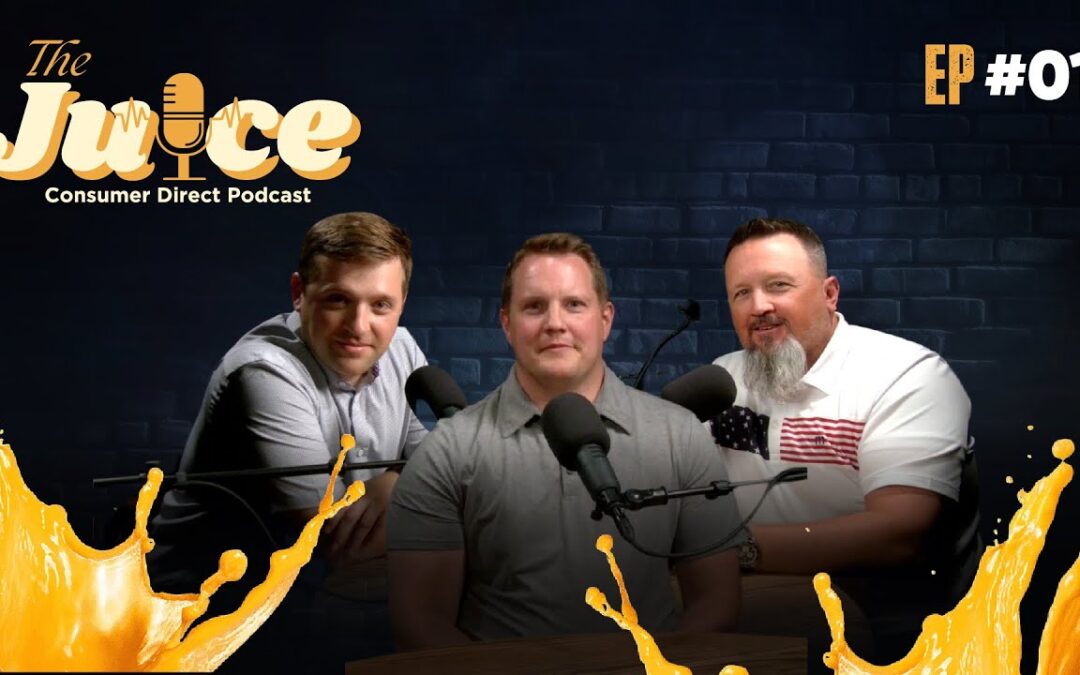
Carson Poppenger and Jacob Thorpe — the CEO and VP of Clients at Squeeze — pull back the curtain on 15+ years of consumer-direct marketing, revealing why most enterprise sales funnels leak revenue long before a salesperson ever picks up the phone.
Listen wherever you get your podcasts
Key takeaways
- Sales funnel leakage — not bad leads — is the most common reason enterprises fail to hit revenue targets.
- Salespeople's highest-value activity is closing, not prospecting; separating the two roles dramatically increases revenue per hour.
- A loan officer dialing cold may talk to 10 people from 80 dials; pre-qualified inbound calls can deliver 10–12 qualified pitches in the same time.
- Co-registered leads sold to multiple companies carry lower yield and risk damaging brand perception before the first call.
- Daily bi-directional KPI reporting between client and vendor is essential for real-time funnel optimization.
- Squeeze's client data shows $12 returned for every $1 spent when lead outreach is properly systematized.
- Build measurement infrastructure at small lead volumes — it becomes exponentially harder to retrofit at scale.
What Is Consumer Direct Marketing — and Why Does It Break?
Squeeze, founded in 2009 during the Great Recession, was built around a single observation: large sales organizations were buying thousands of leads every week and failing to convert most of them. Carson Poppenger watched a 500-person education sales team consume 10,000 leads per week and still leave enormous revenue on the table. That gap became the company’s entire reason for existing.
The hosts — Carson (CEO, 20 years in the space) and Jacob Thorpe (VP of Clients & Partnerships, 10 years at Squeeze) — are joined by Nate Cay (Chief Revenue Officer, 17 years in lead gen) for the debut episode. Together they serve enterprise clients across financial services, mortgage, insurance, home services, and more.
The Sales Funnel Has More Holes Than You Think
The central theme of the episode is funnel visibility. Most companies treat lead generation as a two-step process — leads in, sales out — ignoring everything in between. Jacob’s diagnostic approach starts by mapping every touchpoint and asking: where does the prospect’s experience break down?
- Salespeople hoard leads. One loan officer had 2,000 leads assigned to their name with zero follow-through. A partner who wipes stale queues every three weeks and hands those leads to Squeeze now closes them at rates matching their best digital forms.
- Prospecting is the wrong job for closers. A salesperson dialing cold might make 80 calls and reach 10 people. Hand them pre-qualified inbound calls and they handle 10–12 qualified pitches in the same window — revenue per hour “goes through the roof.”
- Aggressive contact strategies destroy brand trust. A prospective partner once proposed calling leads 60 times in seven days and using manufactured urgency to “deescalate” them. The team rejected it outright — compliance risk aside, the customer experience is irreparably damaged.
Lead Quality vs. Lead Volume: Finding the Sweet Spot
The hosts break the lead universe into two poles:
- High-quality, branded leads — consumers who filled out a long-form on an owned-and-operated site, gave explicit consent, and expect a great experience. Yield to sales opportunity is high; white-glove outreach is essential.
- Co-registered or shared leads — cheaper, higher volume, potentially sold to five or more companies simultaneously. Contact and conversion rates are significantly lower, and the consumer’s brand perception may already be negative by the time you reach them.
The honest answer: maximize high-quality, consistent lead flow first. Build the measurement infrastructure — daily KPI reporting shared between client and vendor — before scaling volume. Squeeze’s own analysis found that for every dollar clients spend on their service, they receive $12 in return.
Parting Advice: Build the Foundation Before Scaling
Both hosts converge on two principles for anyone building a consumer-direct operation:
- Get the right people in the right roles. Strategy, reporting, and process management only work when the humans executing them are well-matched to the function.
- Begin with the end in mind. It is far easier to build tracking and process discipline with five leads than with 2,000 leads across 30 sources. Start clean, and the systems will scale.
Some people just think it's leads and sale — there's so much that happens in the middle.
— Jacob Thorpe
For every dollar they spend with us they get $12 in return because we specialized and we get to it.
— Carson Poppenger
It's a lot easier to track those metrics with five leads than it is to track it with 2,000 leads and 30 different sources.
— Jacob Thorpe
Their highest and best use is being on the phone with a customer generating revenue — not doing activity that leads up to it.
— Carson Poppenger
Episode chapters
- 00:11 — Welcome & Show Introduction
- 00:34 — Meet the Hosts: Carson Poppenger, Jacob Thorpe & Nate Cay
- 03:03 — Origin of Squeeze & the Lead Conversion Problem
- 04:46 — Diagnosing the Sales Funnel: Where Deals Drop Off
- 07:44 — White-Glove Outreach & Brand Protection
- 08:03 — The 60-Calls-in-7-Days Horror Story
- 14:46 — Lead Volume vs. Lead Quality: Finding the Balance
- 17:00 — Why Salespeople Shouldn't Prospect: The Specialization Case
- 19:29 — Measuring Performance: Daily KPIs & Client Partnerships
- 24:32 — Parting Advice: People, Process & Beginning With the End in Mind
Frequently asked questions
What is consumer direct marketing?
Consumer direct marketing is the practice of reaching out directly to individual consumers — via calls, SMS, or email — to convert leads into sales opportunities. It sits between lead generation and a salesperson's pitch, focusing on contact rates, qualification, and brand-consistent outreach.
Why do large sales teams fail to convert leads they've already purchased?
Closers are optimized for pitching, not prospecting. Leads often sit idle in a salesperson's queue for months because following up on cold data is a different skill set than closing. Without a dedicated outreach layer, a significant portion of purchased lead volume is never meaningfully contacted.
What is the difference between a co-registered lead and a branded lead?
A branded lead is someone who filled out a form on a company's own website, gave explicit consent, and expects to hear from that brand. A co-registered lead may have been sold to multiple companies across different industries, resulting in lower contact rates, lower conversion, and a potentially negative first impression.
How should companies balance lead volume vs. lead quality?
Start by maximizing high-quality, consent-based leads and building the measurement systems to track yield at each funnel stage. Once you understand your conversion rates, you can decide how much lower-quality volume is worth adding to hit growth targets.
What ROI can companies expect from outsourcing lead outreach to a specialist?
According to Squeeze's internal analysis, clients who use their consumer-direct outreach service see approximately $12 returned for every $1 spent, driven primarily by efficiency gains from specialization.
What contact strategies should be avoided in consumer direct marketing?
Avoid high-frequency, pressure-based tactics such as calling a lead 60 times in seven days or using manufactured urgency. Beyond compliance risks, these approaches erode brand trust and reduce long-term conversion rates.