
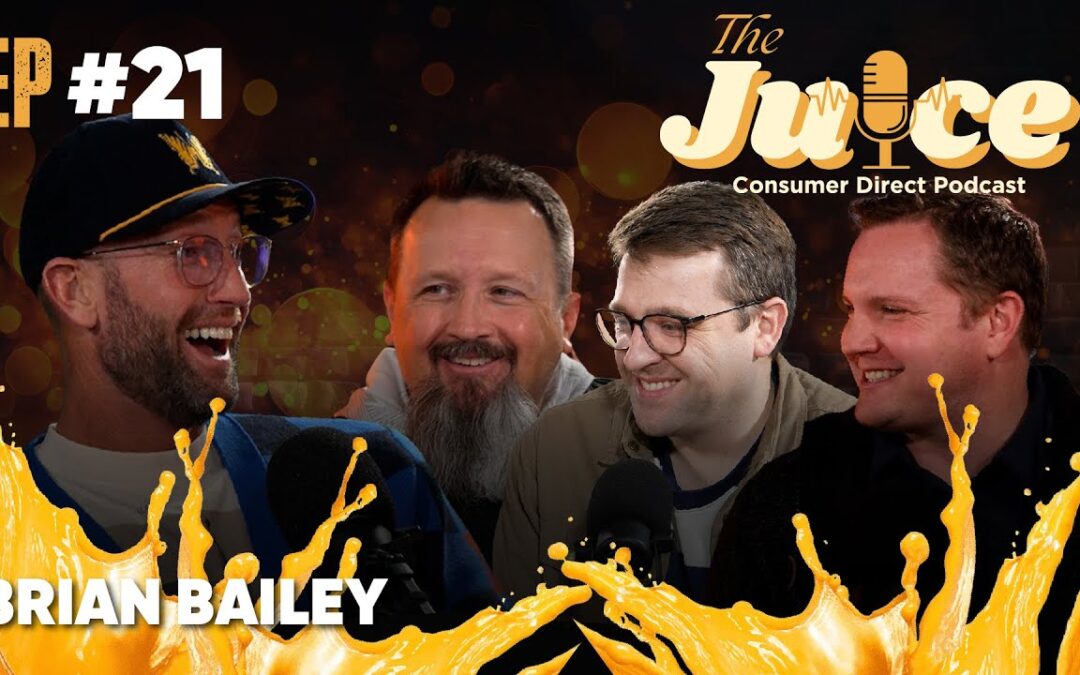
Brian Bailey built a consumer-direct mortgage machine that produced 4,500 loans and over $1 billion in originations in a single year. Here's the playbook — from uncovering a prospect's real motivation to why he'll always hire inexperienced over experienced.
Listen wherever you get your podcasts
Key takeaways
- Find the 'gem' — the real emotional motivation — before ever quoting a rate or price; it's the difference between a strong close and a cancellation.
- Consumer-direct lending requires high phone velocity and rapid rapport-building; traditional relationship-based origination skills don't transfer directly.
- Inexperienced, coachable hires consistently outperform experienced loan officers who carry habits from other companies.
- The fastest training method is live phone time — shadowing top producers briefly, then getting on calls and learning from rejection.
- Mirroring a caller's energy and personality type (analytical, driver, expressive, passive) dramatically improves conversion rates.
- AI cannot yet replicate the emotional pivoting and trust-building required to close high-stakes financial transactions over the phone.
- A rate environment in the low-to-mid 5% range — or a viable hybrid ARM product — would be the catalyst for a meaningful consumer-direct volume recovery.
Consumer Direct vs. Traditional Mortgage Lending
Traditional loan officers build pipelines through real estate agent relationships, coffee meetings, and referrals — closing perhaps 10 loans in a strong month. Brian Bailey’s consumer-direct model at LowVARates operates on a fundamentally different engine: inbound calls, live transfers, direct mail, and internet leads feeding a high-volume phone sales floor. At its peak, Bailey’s team closed 653 loans in a single month and $1 billion in originations in a year. The difference isn’t just scale — it’s an entirely distinct skill set.
The “Rock and the Gem” Discovery Framework
Every inbound caller has a surface reason and a real reason for picking up the phone. Bailey calls these the rock and the gem. The rock is the stated motivation (“I want the lowest rate”). The gem is the emotional driver underneath — a son starting college, a medical bill, a home renovation. Loan officers who pitch rate before finding the gem see higher cancellation rates and weaker closes. Those who tie the transaction to a personal outcome keep clients committed even when underwriting gets complicated.
Why Price Should Never Come First
Rolling the price early is one of the most common mistakes Bailey sees. Without knowing the gem, the rest of the call becomes a price justification exercise — and the customer ends the conversation feeling like they didn’t get a deal, even when they did. Probe first, quote second.
Hiring for Coachability, Not Experience
Bailey has a clear preference: inexperienced over experienced, every time. Loan officers who come from other mortgage companies arrive with entrenched habits that clash with the consumer-direct model. New hires with a strong personal “why” — financial pressure, ambition, a life goal — are more moldable, more motivated, and faster to ramp. Training is simple: shadow the top producers for two days, get licensed, pick up the phone.
- Self-determination matters more than a résumé. 100% commission structures surface it quickly.
- On-the-job learning beats classroom training. Mistakes on live calls are the fastest teacher.
- Coachability compounds. Humble reps take ownership of losses and improve; entitled veterans make excuses.
Adapting to Different Caller Personalities
Not every prospect wants rapport before the pitch. Bailey describes mirroring the caller’s energy — matching urgency for the “driver” type who wants to control the call, and creating space for the more expressive prospect who opens up when you ask about the kid in the background. Reading the room on the phone is a trainable skill, though some reps develop it intuitively.
AI in High-Stakes Sales: Not There Yet
Bailey is skeptical that AI can replace human connection in mortgage transactions. The compliance implications of a licensed originator having zero communication with a borrower are unresolved, and the emotional intelligence required to pivot mid-conversation — to find the gem, mirror energy, and earn trust — is still beyond current chatbot technology. For transactional triage, AI has a role. For closing a refinance, a person wins.
The 2025 Rate Environment
Bailey doesn’t see a dramatic rate drop on the horizon. His benchmark for meaningful volume recovery is the low-to-mid 5% range — or a compelling hybrid ARM product that gives consumers a meaningful discount to the par rate, similar to the strategy that drove 97% of their loan volume in 2013.
You've got like a second to make an impression on somebody to get them interested in whatever it is that you're selling that day.
— Brian Bailey
It has like nothing to do with the mortgage anymore — he's tied to that emotion, that feeling.
— Brian Bailey
Inexperienced, for sure. Having experience in the mortgage world at another company is a pretty big stumbling block.
— Brian Bailey
A good personal touch on a sale — it's priceless. It can generate more repeat business.
— Brian Bailey
Episode chapters
- 00:11 — Introductions & Brian Bailey's record-breaking numbers
- 01:48 — Brian's origin story: door-to-door sales to mortgage
- 04:10 — Building sales culture: hiring, motivation, and the 'why'
- 06:47 — Inexperienced vs. experienced hires — why coachability wins
- 09:34 — Consumer direct vs. traditional mortgage lending
- 12:24 — Probing questions: the Rock and the Gem framework
- 19:11 — Reading caller personalities and mirroring energy
- 24:13 — Compliance, FCC changes, and consolidating brick-and-mortar operations
- 31:55 — AI in mortgage sales: limitations and the human edge
- 35:48 — 2025 rate outlook and product strategy
Frequently asked questions
What is consumer direct mortgage lending?
Consumer direct lending uses inbound calls, live transfers, direct mail, and digital leads to connect borrowers directly with loan officers — bypassing the real estate agent referral model. It requires high phone volume and fast rapport-building rather than relationship cultivation over months.
How do top mortgage loan officers close more loans by phone?
The key is discovering the borrower's real motivation — the emotional 'why' — before quoting rates. Officers who tie the transaction to a personal goal (funding education, covering medical bills, home improvements) see stronger closes and far fewer cancellations.
Why does Brian Bailey prefer hiring inexperienced loan officers?
Experienced hires from other mortgage companies tend to be set in their ways and resistant to coaching. New hires with a strong personal motivation and no preconceived habits adapt faster to the consumer-direct model and typically outperform.
Can AI replace human loan officers in mortgage sales?
Not in high-stakes, high-complexity transactions according to Bailey. Compliance requirements for licensed originators, plus the emotional intelligence needed to pivot conversations in real time, are beyond current AI capabilities. AI works for simple decision-tree filtering but not for closing.
What mortgage rate environment would revive consumer direct refinance volume?
Bailey estimates rates in the low-to-mid 5% range would meaningfully restore refinance demand. Alternatively, a hybrid adjustable-rate product priced a couple of points below the par rate — as worked successfully in 2013 — could drive volume even without a big rate drop.
What is the difference between an inbound call and a warm transfer in mortgage sales?
An inbound call means the consumer chose to reach out, signaling clear intent. A warm transfer involves a fronter who interrupted the prospect's day, screened for basic qualification, and then connected them — so there's some intent but less inherent interest than a pure inbound call.