
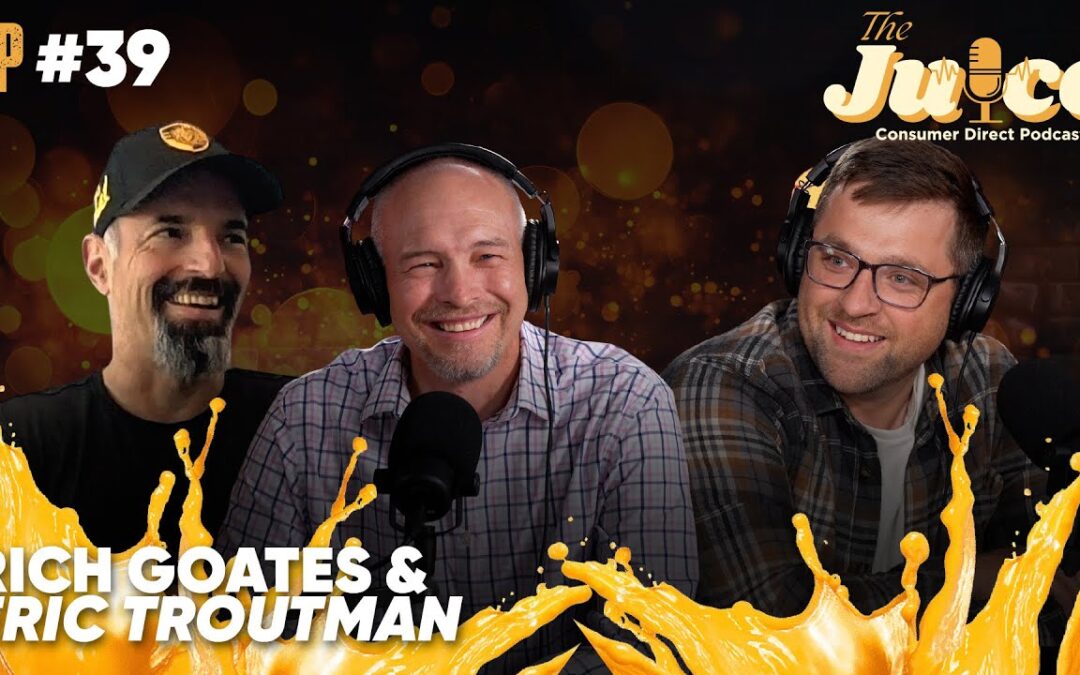
AI voice agents are flooding outbound pipelines — but the laws governing them are already on the books and being ignored. TCPA litigator Eric "The Czar" Troutman and compliance attorney Rich Goates spell out exactly where consumer-direct marketers are getting burned and what they must do before the reckoning arrives.
Listen wherever you get your podcasts
Key takeaways
- AI voice agents are legally classified as robocalls under the TCPA and require prior express written consent before any outbound dial.
- The FCC's April 2026 multi-channel opt-out rule will require a single consumer opt-out to halt communications across all channels at the same consent level — system integrations must be ready now.
- Buying aged leads stacks multiple risk layers: potential consent revocation, phone-number reassignment, and lead fraud — always check the reassigned-number database.
- Contract language that says 'consent' without specifying prior express written consent creates dangerous liability gaps between sellers and dialers.
- Monitoring refusal rates, opt-out rates, and customer sentiment within hours of campaign launch is a practical early-warning system for compliance risk.
- REACH (reachmbbc.com) is a 501(c)(3) self-regulatory organization that sets lead-quality standards; stricter lead filters typically raise conversion rates by removing garbage records.
- Being an early adopter of AI outbound technology without mastering the legal underpinnings means short-term gains will be erased by long-term exposure — likely a thousandfold.
Why TCPA Remains the #1 Threat for Consumer-Direct Marketers
TCPA risk consistently tops the threat list in every SWOT analysis run by consumer-direct companies — and for good reason. Eric Troutman, who has defended more than 800 national TCPA class actions, puts it plainly: companies can be fully aware of the TCPA and still get crushed because of how nuanced the statute is. Rich Goates, who spent years as in-house counsel at Pinnacle Security and Vivint, adds that the most dangerous blind spots aren’t ignorance of the law — they’re misunderstanding how it applies to a specific use case.
The Compliance Gaps That Keep Getting Companies Sued
- Aged leads: Buying older data layers on risk from potentially revoked consent, phone-number reassignment, and outright fraud. Failing to check the reassigned-number database before dialing is a recurring and costly mistake.
- SMS opt-outs: After the FCC’s April rulings, honoring only “STOP” in all-caps is no longer sufficient. Plain-language requests like “leave me alone” or “knock it off” now constitute valid revocations of consent and must trigger a DNC entry.
- Multi-channel opt-out (April 2026): An upcoming FCC rule will require that a consumer’s opt-out on one channel — say, a text — must also halt voice communications for any purpose requiring the same or greater level of consent. System integrations must be in place before this takes effect.
- Consent-level mismatches in contracts: When a seller passes “consent” to a dialer using an ATDS, the contract rarely specifies prior express written consent — the higher standard the technology actually requires. Both sides need legal counsel aligned on exactly what level of consent is being represented.
- Vocabulary traps: Companies that believe they aren’t “telemarketing” because they have consent or an existing business relationship still must comply with all TCPA rules; they’re simply calling under an exception, not outside the law.
AI Outbound Dialing: Wild West With Existing Laws
Generative AI voice agents feel new, but Troutman is emphatic: the laws already exist and are already being violated. An AI agent conducting a back-and-forth voice conversation is treated as a pre-recorded artificial voice — a robocall — under the TCPA. That means prior express written consent is required before the first dial. In the SMS channel there is more legal gray area, but systems with latent auto-dialing capabilities likely still qualify as an ATDS, triggering the same heightened consent standard.
Goates cautions that the urge to be a first mover is understandable but strategically dangerous: circuit courts across the country are still issuing scattered, non-binding rulings on AI and ATDS definitions, and landing on the wrong side of a novel opinion can mean years of expensive appellate litigation regardless of how strong your position looks today.
Customer Sentiment as a Compliance Early-Warning System
At Squeeze, the team says they know within two hours of launch whether a campaign is a winner — refusal rates, opt-out rates, and bad-lead rates tell the story immediately. High DNC requests or agent escalations are red flags that warrant shutting a campaign down even if you believe you’re technically within the law. Complaints, as a Better Business Bureau contact once noted, are a gift: they show you exactly where to improve before regulators or plaintiff’s counsel do it for you.
REACH: The Industry’s Self-Regulation Play
Troutman founded Responsible Enterprises Against Consumer Harassment (REACH) — reachmbbc.com, a 501(c)(3) — to raise lead-quality standards from the buyer side. The premise: if large lead buyers refuse to purchase data that doesn’t meet transparency and consent standards, lead generators are forced to clean up their practices. The knock-on effect for compliant dialers is higher conversion rates, because low-quality and recycled records are purged before they ever hit a call queue. Sustainable growth, Troutman argues, comes from calling people who actually want the call.
You can be fully aware of the TCPA and even kind of like conceptually tracking it and yet it still crushes you because of how nuanced it is.
— Eric Troutman
People who are early adopters of AI in outbound B-to-C channels who aren't trying to follow the law — you're going to get cooked. It's just a matter of time.
— Eric Troutman
If you turn it on and there's a huge number of do-not-call requests and escalations and people that want to talk to managers — shut it off.
— Jacob Thorpe
Whatever little gains you have now, you're going to lose later plus a thousandfold probably.
— Eric Troutman
Episode chapters
- 00:10 — Introductions & Guest Backgrounds
- 05:00 — Door-to-Door Sales, Recorded Calls & Compliance Accountability
- 09:00 — Eric's TCPA Zar Brand & TCPA World Blog
- 12:20 — Top TCPA Risks: Aged Leads, SMS Opt-Outs & Blind Spots
- 17:30 — Multi-Channel Opt-Out & the April 2026 FCC Rule
- 20:05 — Consent-Level Mismatches in Dialer Contracts
- 25:10 — AI Outbound Dialing: Legal Risks & Why to Slow Down
- 32:57 — Where TCPA Law Is Headed in the Next 3–4 Years
- 36:07 — Using Customer Sentiment as a Compliance Signal
- 39:14 — REACH: Self-Regulation & Higher Lead Quality Standards
Frequently asked questions
Does the TCPA apply to AI-generated voice calls?
Yes. An AI agent using a generative voice in an outbound call is treated as a pre-recorded artificial voice under the TCPA, making it a robocall. Prior express written consent is required before dialing consumers.
What is prior express written consent under the TCPA?
It is a signed agreement — typically a web-form disclosure — in which the consumer acknowledges they are consenting to calls using automated technology for marketing purposes and that consent is not required to make a purchase. It is a higher standard than general consent.
What changes with the FCC's April 2026 multi-channel opt-out rule?
Starting April 2026, a consumer opt-out on one channel (e.g., texting STOP) must also stop voice communications for any purpose requiring the same or greater level of consent. Businesses need integrated systems to honor cross-channel revocations in real time.
Why are aged leads risky under the TCPA?
Aged leads carry the risk that consent was already revoked, that the phone number has been reassigned to a different person, or that the lead was generated through fraud. Calling a reassigned number makes the caller strictly liable under the TCPA regardless of original consent.
What is REACH and how can companies join?
REACH (Responsible Enterprises Against Consumer Harassment) is a 501(c)(3) mutual benefit corporation founded by Eric Troutman to set transparency and consent standards for lead buyers and generators. Companies can join at reachmbbc.com.
Do the same TCPA rules that apply to phone calls also apply to text messages?
Yes. Text messages sent for marketing purposes are subject to the same TCPA rules as outbound calls, including consent requirements, opt-out honoring, and do-not-call compliance. Many businesses incorrectly assume texting falls outside telemarketing law.