
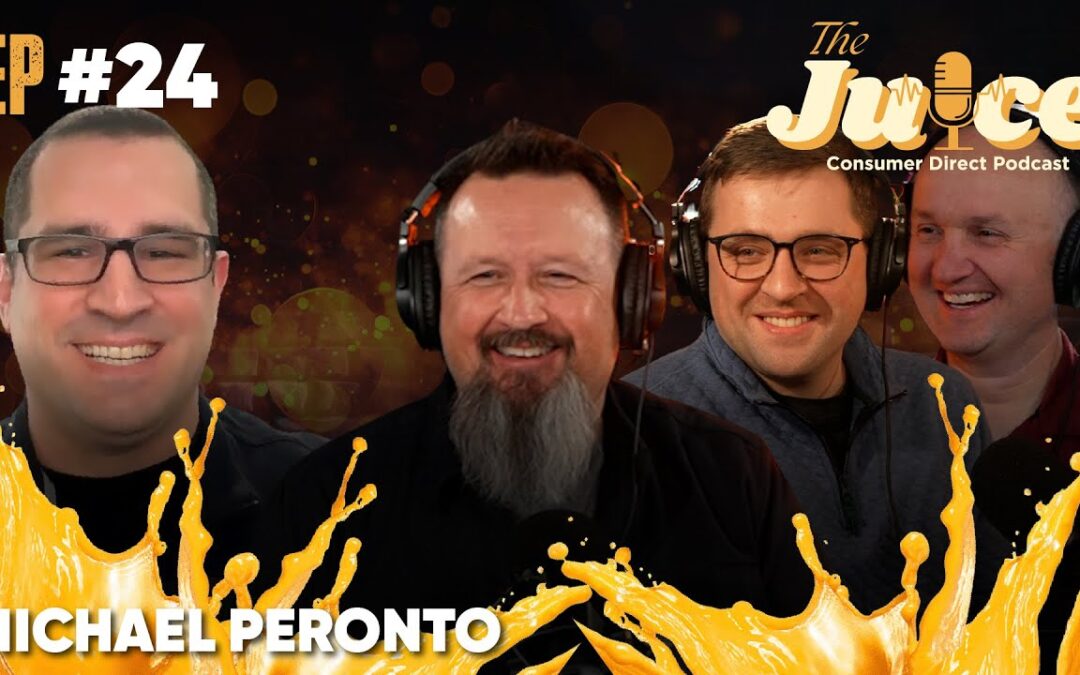
TCPA's April 11 consent-revocation rule is about to upend every distributed retail operation still running siloed CRMs and ad-hoc contact strategies. Active Prospect GM Michael Peronto joins Squeeze's Carson Poppenger, Jacob Thorp, and Brett Evanson to map the legal landmines—and the AI-powered tools that turn compliance overhead into competitive advantage.
Listen wherever you get your podcasts
Key takeaways
- Distributed retail branches using separate CRMs and dialers create catastrophic TCPA liability because unified phone records cannot be produced in litigation.
- The April 11, 2025 FCC rule requires companies to honor consent revocation made through any channel—email, text reply, or in-person request—across all contact methods company-wide.
- Incentivizing branches onto a centralized CRM (discounted seats, corporate lead buys, approved vendor lists) is more effective than mandating compliance alone.
- Lead scoring and propensity-based routing—not raw volume—drive conversion; lower-intent leads should be pre-qualified by a third-party call center before reaching tier-one agents.
- AI call transcription (Peel Voice) can quantify 'not interested' dispositions into actionable sub-segments for retargeting, lander optimization, and downstream remarketing.
- Sentiment-based lead distribution—routing calls to agents showing positive emotional signals—removes the manager bias that historically steered premium leads to struggling reps.
- SMS should be deployed after failed outbound call attempts, not as a first touch, to avoid triggering broad consent revocation that eliminates the entire lead from the pipeline.
The “Wild West” Problem in Distributed Retail
Michael Peronto—GM of Financial Services at Active Prospect and a 13-year veteran of lead management—opens with the central tension facing multi-branch organizations: branches that choose their own CRM, their own lead vendors, and their own dialing tools create an unmanageable patchwork that makes TCPA defense nearly impossible. When a lawsuit arrives, producing a unified call record is impossible if data lives across seven or eight platforms, personal cell phones, and unauthorized ringless-voicemail tools.
The fix isn’t simply mandating a single system. Peronto outlines a carrot-and-stick approach: offer branches discounted seat pricing, corporate lead buys, and pre-vetted vendor lists to pull them onto the centralized platform, while making clear that corporate retains compliance oversight without sharing one branch’s data with another.
April 11 Consent-Revocation Rule: What Changes
Under the upcoming FCC/TCPA ruling, a consumer can revoke consent to be contacted through any reasonable means—an email to a general inbox, a reply to an intro text, even a walk-in request at a branch location. That opt-out must immediately cascade across every call center, CRM, and vendor in the corporate ecosystem.
- Keyword-only opt-outs are gone. Phrases like “leave me alone” now carry the same legal weight as “STOP.”
- Omni-channel revocation is required. A text opt-out eliminates phone contact rights too—and vice versa.
- Timing of text deployment matters more than ever. Sending an SMS as the very first touch gives consumers an easy lever to eliminate all future outreach before a call is ever attempted.
The hosts note that litigation testers will probe for failures at scale immediately after the rule takes effect, making automated, time-stamped consent records—not manual inputs—the only defensible standard.
Lead Scoring, Routing, and the “Sacred Cow” Problem
Peronto argues that smarter lead routing—not higher lead volume—is the real performance lever. His recommended flow: validate contact data, screen for known TCPA litigants, deduplicate within 24 hours, score the record, then route by propensity to close. Lower-score records go to a pre-qualification call center; higher-score records go directly to tier-one agents. Peronto and the Squeeze team both push back on internal “sacred cows”—fronter teams or legacy workflows that persist for political rather than performance reasons.
Peel Voice: From Dispute Tool to Competitive Product
Squeeze’s AI voice-transcription platform, Peel Voice, began as a way to settle a billing dispute by running an LLM against call transcripts. It has since expanded into five distinct use cases:
- Compliance monitoring — flags opt-out phrases and script deviations across 100% of calls.
- Agent performance — measures tone, rebuttal frequency, and effort; overlays with bonus data to show agents that more rebuttals equal more pay.
- Client-side QA — partners can have their own agent calls analyzed for product-pitch alignment and discovery-question adherence.
- Quantifying qualitative data — of 1,500 “not interested” dispositions for one mortgage client, 35% were “just browsing,” 15% cited trust issues, 10% cited rates—actionable segments for retargeting and lander optimization.
- Coaching efficiency — a coaching session that previously took 30 minutes now takes five, because the AI summary is sent directly to the agent for self-review before a manager signs off.
Sentiment-Based Lead Distribution and the Road Ahead
Peronto introduces the concept of sentiment-based distribution: analyzing an agent’s last 50 calls in real time and routing high-value inbound leads to agents currently showing positive sentiment scores—removing the emotional, relationship-driven routing decisions that managers have historically made to the detriment of conversion rates. Both sides agree AI adoption in consumer direct contact centers is still in its earliest innings, with the clearest winners being teams that lean into the tooling rather than waiting for it to mature.
Once they get those lawsuits they start to uncover a couple of things that make it very, very difficult in their defense.
— Michael Peronto
You can end up cannibalizing your lead flow if you're not smart about where you place the different touch points.
— Michael Peronto
AI is not going to take your job, but someone leveraging AI is going to take your job.
— Jacob Thorp
This was just supposed to protect us and now it's become this competitive advantage that our partners are saying hey, can we license this?
— Jacob Thorp
Episode chapters
- 00:10 — Introductions: Michael Peronto & Active Prospect
- 02:31 — The Wild West of Distributed Retail Operations
- 04:00 — TCPA Lawsuits and the Dangers of Siloed CRMs
- 08:49 — How to Centralize Compliance Without Killing Branch Autonomy
- 13:29 — April 11 Consent-Revocation Rule: What Operators Must Do
- 19:57 — Lead Scoring, Deduplication, and Litigant Screening
- 27:58 — Peel Voice: How Squeeze Built an AI Call-Analysis Product
- 31:49 — Quantifying 'Not Interested' Dispositions for Remarketing
- 39:55 — Sentiment-Based Lead Distribution and the Future of AI in Sales
- 45:43 — Industry Conferences: LeadsCon, HousingWire, Money 20/20
Frequently asked questions
What does the April 11, 2025 TCPA consent-revocation rule actually require?
Starting April 11, consumers can revoke consent to be contacted through any reasonable means—email, text reply, verbal request, or any other channel. That revocation must immediately halt outreach across all contact methods and all vendors in a company's ecosystem, not just the channel used to opt out.
Why is a decentralized CRM dangerous for TCPA compliance?
When branches use separate CRM, dialing, and marketing platforms, it becomes nearly impossible to produce a unified call record in litigation. Plaintiffs can request all phone records, and companies with seven or eight disconnected systems—including personal cell phones—cannot mount a credible defense.
What is Active Prospect and what does it do for TCPA compliance?
Active Prospect is a TCPA compliance platform that captures and stores timestamped evidence of consumer consent, screens inbound leads against known litigant databases, validates contact information, and deduplicates records before they enter a CRM.
What is Peel Voice and how does Squeeze use it?
Peel Voice is Squeeze's AI-powered call transcription and analysis tool. It runs LLM queries against call transcripts to flag compliance issues, measure agent performance metrics like rebuttal frequency and tone, and quantify the real reasons behind 'not interested' dispositions for downstream marketing use.
How should companies sequence SMS outreach after the new TCPA rule?
Send outbound calls first; deploy SMS only to consumers who have not answered phone attempts. Sending a text as the first touch gives consumers an easy way to trigger a broad opt-out that eliminates all future phone and text contact, directly inflating cost-per-acquisition.
What is sentiment-based lead distribution in a contact center?
Sentiment-based distribution uses AI analysis of an agent's recent calls to score their current emotional state, then routes high-value leads to agents showing positive sentiment. This removes subjective, relationship-driven routing decisions that historically cost contact centers significant conversion revenue.