
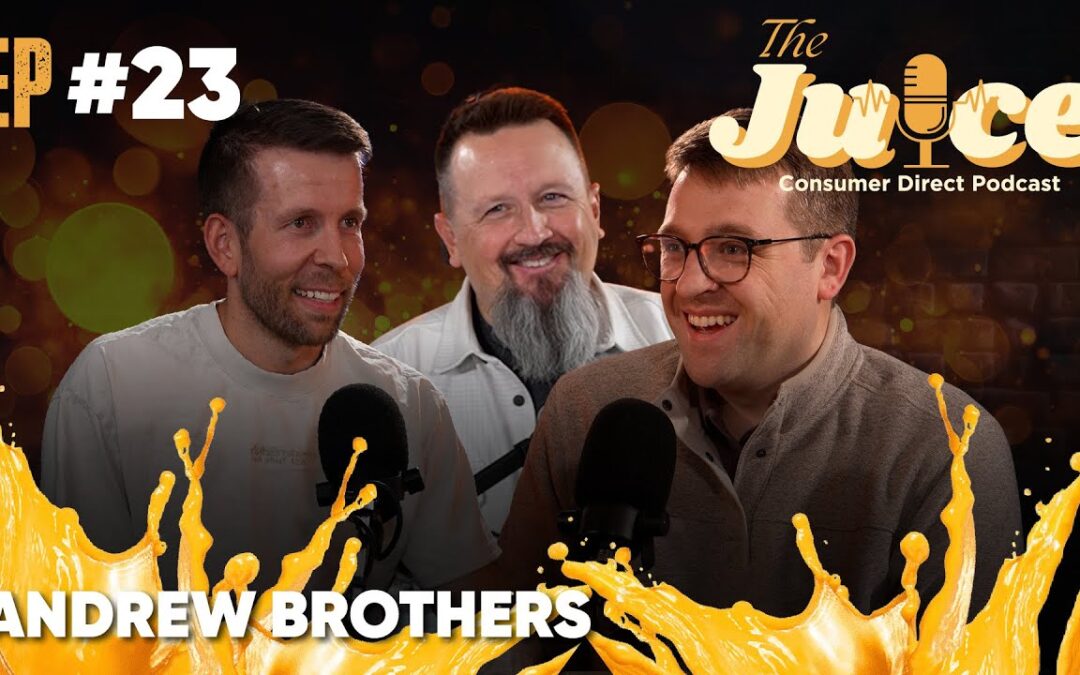
Andrew Brothers, Director at Vivint Smart Home, has spent 11 years scaling an inside sales operation from individual contributor to overseeing 120–150 agents and nine team managers. His playbook—rooted in systems thinking, intentional leadership, and culture-first process adherence—offers a masterclass for anyone building or running a consumer-direct sales org.
Listen wherever you get your podcasts
Key takeaways
- Prioritize by identifying the single biggest constraint (P1) restricting your team, then work heads-down until it's resolved before moving to the next.
- Use backward planning: define the end goal, identify the last step before it's achieved, and map every prerequisite back to today's action items.
- Intentional presence in leadership interactions—one-on-ones, staff meetings, coaching sessions—creates disproportionate impact on team trust and performance.
- Culture enforces process adherence more durably than systems alone; when agents understand the 'why,' they self-police rather than seek loopholes.
- AI-driven voice analytics enable QA at scale by scoring every call against compliance and sales-process checkpoints, tying results directly to agent incentives.
- Build a collaborative culture by having team members co-create solutions to problems rather than handing down directives—ownership drives better execution.
- Develop people with an abundance mindset: make them better for having worked with you, whether they stay six months or ten years.
From Door Knocker to Director: Andrew Brothers’ Path at Vivint
Andrew Brothers joined Vivint Smart Home as a direct home sales rep knocking doors in Texas before transitioning to inside sales while finishing his Exercise Science degree at BYU. Eleven years later, he directs an inbound call center of 120–150 agents organized under nine team managers and two department managers—all primarily based in Provo, Utah, with a smaller remote workforce that expanded during COVID.
Systems Over Goals
Brothers opens with the James Clear principle his team lives by: “You don’t rise to the level of your goals—you fall to the level of your systems.” For him, the director role is less about chasing numbers and more about relentlessly identifying and eliminating the single biggest roadblock facing his team at any given moment. He calls this approach P1/P2 prioritization—isolating the one or two constraints that, if removed, create the most downstream leverage.
Forward Thinking, Backward Planning
A recurring theme throughout the conversation is what Brothers calls “forward thinking, backward planning.” Rather than stating an end goal and hoping execution fills the gap, his process works backward from the desired outcome—identifying every prerequisite step until you reach today’s action items. The method doubles as a resource-planning tool: modeling how many leads, agents, and conversion rates are required to hit a target before committing to it.
Intentional Leadership in Practice
Brothers uses a personal story—contrasting two childhood Jazz games, one attended with a fully present mother and one with a father buried in a book—to illustrate how the same activity produces radically different outcomes depending on intentionality. The lesson maps directly to leadership: showing up to one-on-ones, staff meetings, and coaching sessions with genuine presence and purpose separates managers who move people from those who merely go through the motions.
Building a Collaborative, Competitive Culture
Vivint’s inside sales team competes, but Brothers has worked deliberately to make that competition healthy rather than siloed. The mechanism: bringing cross-functional stakeholders together to source solutions rather than receiving top-down directives. When team members co-create the fix, they own the execution. Direct, candid feedback is welcomed because the underlying relational trust has been built first.
Process Adherence, QA, and AI Analytics
Brothers draws a clear line between following a process and executing on it—the latter requires understanding the “why” behind every step. Vivint enforces adherence through:
- Structured call flows that guide reps without making them sound scripted
- QA scorecards tied directly to agent incentive thresholds
- AI-powered voice analytics (Vivint is rolling out the Peel Voice system) that scores every call against compliance and sales-process checkpoints
- Sub-metric funnels—contact rate, conversion rate, transfer rate, stick rate—that surface root causes before they erode the top-line install number
Critically, Brothers argues that culture does much of the enforcement work that systems cannot: when team leaders explain the why behind each process step from day one, agents internalize it rather than looking for loopholes.
Developing People for What Comes Next
Whether a rep stays six months or six years, Brothers’ stated goal is that they leave Vivint better than they arrived. That abundance mindset—providing a soft landing for mistakes, coaching through questions rather than directives, and matching people to roles that play to their strengths—drives both retention and long-term organizational performance.
You don't rise to the level of your goals—you fall to the level of your systems.
— Andrew Brothers
My job isn't to get you to be perfect. My job is to help you improve and get better.
— Andrew Brothers
You're not executing my solution—you're executing your solution.
— Andrew Brothers
There's a difference between following the process and executing on the process. Very, very different results.
— Andrew Brothers
Episode chapters
- 00:10 — Introducing Andrew Brothers & His Role at Vivint
- 01:47 — Inside Sales Team Structure: 150 Agents, 9 Managers
- 03:43 — Systems Over Goals & Prioritizing What Matters Most
- 06:02 — Forward Thinking, Backward Planning Explained
- 07:02 — Intentional Leadership: The Jazz Game Story
- 16:33 — Vivint's Acquisition by NRG & Balancing Speed vs. Process
- 23:27 — Building a Collaborative Culture & Solving Problems Together
- 28:17 — Process Adherence, Call Flows & the 'Following vs. Executing' Distinction
- 32:05 — Sub-Metric Funnels, QA Scorecards & AI Voice Analytics
- 35:17 — Culture as the Ultimate Compliance Engine
Frequently asked questions
What is 'forward thinking, backward planning' in sales leadership?
It's a goal-setting method where you define the desired end outcome first, then work backward step by step to identify what must happen immediately before the goal is achieved, continuing until you reach today's actionable tasks. It ensures every action is purposefully connected to the long-term objective.
How does Vivint use AI to improve inside sales performance?
Vivint is rolling out an AI-powered voice analytics platform (Peel Voice) that automatically scores every agent call against compliance requirements and key sales-process checkpoints. Results feed into QA scorecards tied to agent incentive thresholds, enabling consistent quality oversight at scale.
How do you balance healthy competition with team collaboration in a sales org?
Andrew Brothers recommends building a foundation of trust and psychological safety first—so that not finishing number one feels friendly rather than threatening—then channeling competitive energy toward shared goals. Having team members co-create solutions to problems reinforces collaboration even within a competitive structure.
What sub-metrics should inside sales leaders track beyond total sales?
Brothers tracks contact rate, conversion rate, transfer rate, stick rate (scheduled-to-installed), and QA quality score as leading indicators. Each feeds into a funnel model that can pinpoint exactly where performance is breaking down before it impacts the top-line install or close number.
How do you get sales agents to truly adhere to a call process rather than just go through the motions?
Culture and coaching carry more weight than scripts alone. When leaders explain the 'why' behind each process step from day one of training—and when managers reinforce it through question-based coaching rather than top-down directives—agents internalize the process and self-enforce rather than looking for shortcuts.
What leadership approach does Andrew Brothers use to develop his sales managers?
He focuses on providing a 'soft landing' when managers make mistakes, delivering direct feedback grounded in genuine care, and assigning stretch opportunities that expose them to situations slightly beyond their current comfort zone. The goal is growth and transferable skills, not just short-term performance metrics.