
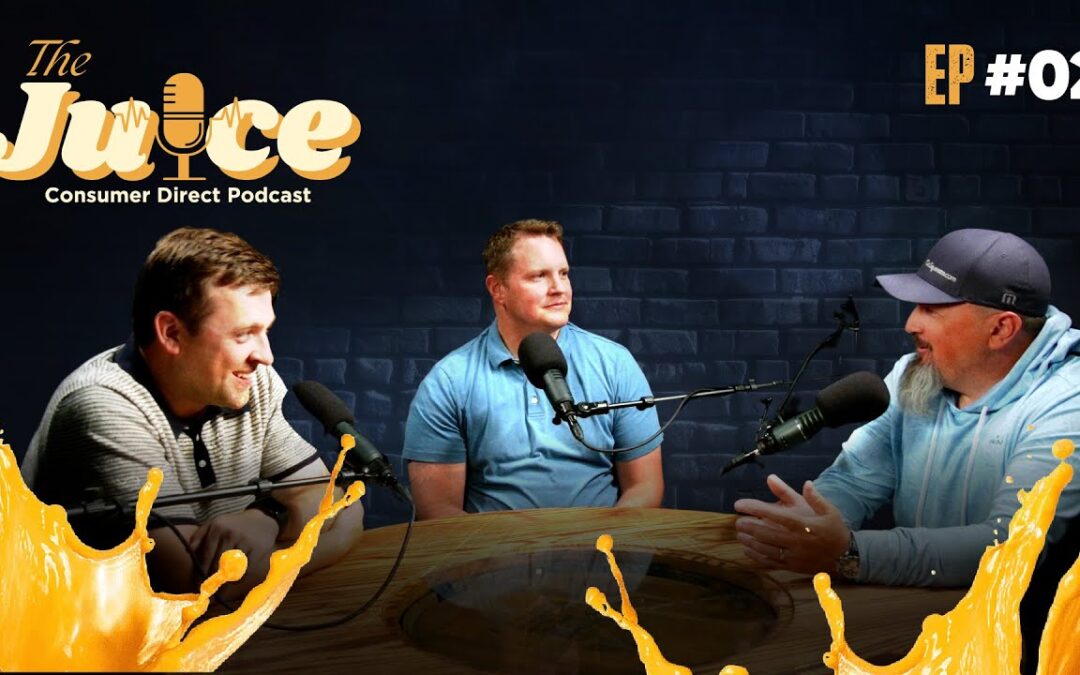
Knowing your audience isn't just a marketing cliché — it's the difference between a deal closed on the back nine and a cold pitch that goes nowhere. The Squeeze team unpacks ICP strategy, incremental optimization, and why shared interests like golf are a legitimate business development tool.
Listen wherever you get your podcasts
Key takeaways
- Define your ICP precisely before launching any outreach — knowing exactly who you're targeting is the single most important step in business development.
- Shared personal interests like golf create relationship depth that structured business settings can't replicate, making them a legitimate sales and BD tool.
- When a strategy isn't working, make incremental, data-informed adjustments rather than abandoning everything you've learned and starting over.
- Top-performing salespeople adapt their communication style in real time based on who they're talking to — read the room, then tailor the message.
- Leadership involvement in the details — like a CMO who listens to customer calls — signals a culture of humility and drives better outcomes across the team.
- Internal audience awareness matters as much as external: knowing your teammates' interests and communication styles makes you a more effective leader.
- Continuous improvement over complacency: always ask what can be optimized, and check your ego at the door when the data says you were wrong.
Why Tailored Messaging Is the Foundation of Effective Marketing
Every marketing effort starts with the same question: who are you talking to, and what’s the most effective way to reach them? For the Squeeze team, that question drives everything — from high-level B2B outreach to how they manage internal team dynamics. In this episode, hosts Nate Cay, Jacob Thorpe, and Carson Poppenger explore the practical mechanics of tailoring communication to specific audiences, using their own business development experiences as a lens.
ICP: The North Star of Business Development
The conversation opens with a focus on Ideal Customer Profiles (ICPs) — the detailed personas that define exactly who a company should be targeting. The team describes how Squeeze has sharpened its ICP discipline, noting that precision in identifying the right prospects upstream saves significant time and energy downstream. Top-performing salespeople, they argue, adapt their approach almost instinctively the moment they understand who they’re talking to.
Golf as a B2B Relationship Tool
A recurring thread throughout the episode is golf — not as a hobby tangent, but as a concrete example of audience-aware relationship building. The hosts discuss how discovering a prospect’s personal interests (in one case, golf and Coors Light) creates an immediate, authentic connection that no Zoom call can replicate. Key observations include:
- Golf reveals character — how someone handles a bad shot says a lot about how they’ll handle a difficult business moment.
- Scramble formats lower the stakes and build team cohesion, both on the course and as an analogy for collaborative work culture.
- Industry conferences often pair with golf tournaments, making the skill a genuine professional asset.
- Shared on-course experiences create lasting inside jokes and strengthen long-term client relationships.
Business Analogies from the Fairway
The team draws direct parallels between golf strategy and business strategy. Jacob’s concept of “making your feels real” — testing hunches with data before committing — mirrors how a golfer must validate a range feel before trusting it on the course. Nate extends the metaphor to lead strategy: like approaching an unfamiliar hole, a campaign that looks straightforward can reveal hidden bunkers mid-execution. The right response isn’t a full pivot; it’s a smart adjustment using what you’ve already learned.
A CMO Who Listens to Calls: What Best-in-Class Looks Like
The hosts share an example of a Chief Marketing Officer at a large mortgage servicer who personally reviews call scripts and listens to customer calls alongside the Squeeze team. Despite a packed calendar and an extensive résumé, he treats every session as a learning opportunity — no sacred cows, no ego. The team cites this hands-on, humble approach as the gold standard for client engagement and a direct reason for that partnership’s success.
Continuous Improvement as a Cultural Mandate
The episode closes on a theme of continuous improvement — a value Carson traces back to a company he worked at 25 years ago and has since embedded in Squeeze’s DNA. The hosts warn against the temptation to scrap everything and start over when something isn’t working; incremental tweaks that preserve hard-won learnings almost always outperform wholesale direction changes. The same logic applies internally: knowing your team members as individuals, understanding what motivates them, and leading from the front are what separate good managers from great ones.
Golf is kind of like… there's so many people in the industry that like golf. It's fun to be outside and away from the office and connect with people in a way that's maybe a little more personal.
— Jacob Thorpe
You learn a lot about somebody golfing with them — you learn a little bit about integrity, the way that they score themselves, the way they interact with the people around them.
— Jacob Thorpe
It creates a relationship that's a lot different than a Zoom call where we're kind of posturing and trying to be buttoned up.
— Jacob Thorpe
Continuous improvement — it's easy to get complacent, it's easy to be comfortable with where you're at. What are you doing next? What are you reaching for?
— Carson Poppenger
Episode chapters
- 00:12 — Welcome & Episode Introduction
- 00:29 — Tailoring Messages: The Core Marketing Objective
- 00:51 — ICP Strategy at Squeeze
- 01:32 — Golf as a Business Development Tool
- 04:54 — What Golf Reveals About Character & Relationships
- 09:08 — Making Your Feels Real: Testing Assumptions in Business
- 10:27 — Incremental Optimization vs. Starting Over
- 17:32 — Most Impressive Client Tailored-Messaging Example
- 19:43 — Hyper-Personalized Marketing & Where It's Headed
- 21:53 — Knowing Your Internal Audience & Continuous Improvement
Frequently asked questions
What is an ICP and why does it matter for marketing?
An ICP (Ideal Customer Profile) is a detailed description of the type of customer who gets the most value from your product or service. Defining it precisely helps teams focus outreach efforts, reduce wasted time on poor-fit prospects, and craft messages that actually resonate.
How does golf help with B2B business development?
Golf creates informal, extended face-time with prospects and partners that structured meetings can't replicate. Shared experiences on the course build personal rapport, reveal character, and generate lasting relationship equity — which is why so many industry conferences include golf tournaments.
What does 'tailoring your message for your audience' mean in practice?
It means identifying what your target persona cares about — professionally and personally — and adjusting your tone, content, and channel to match. In practice it could mean referencing a prospect's love of golf in an outreach email, or adapting a call script to the language a specific customer segment uses.
When a marketing or sales strategy isn't working, should you pivot completely?
The hosts argue against wholesale pivots. Incremental adjustments that preserve learnings from the current approach almost always outperform starting from scratch, because you retain the 'course knowledge' of what you've already tested.
What does 'making your feels real' mean in a business context?
The phrase, borrowed from golf practice methodology, means validating your instincts and assumptions with real data and stakeholder input before fully committing to a strategy — rather than acting purely on a hunch.
Why is internal audience awareness important for team leaders?
Understanding what motivates each team member — their communication style, personal interests, and goals — allows managers to tailor coaching, build genuine trust, and lead more effectively, just as you would adapt messaging for an external customer.